Your five-minute guide to turning a testimonial into months of content
A customer has just said something lovely about you. Here is how to turn that one paragraph into a recorded conversation, and the conversation into three months of posts, clips and sales material
 7 min read
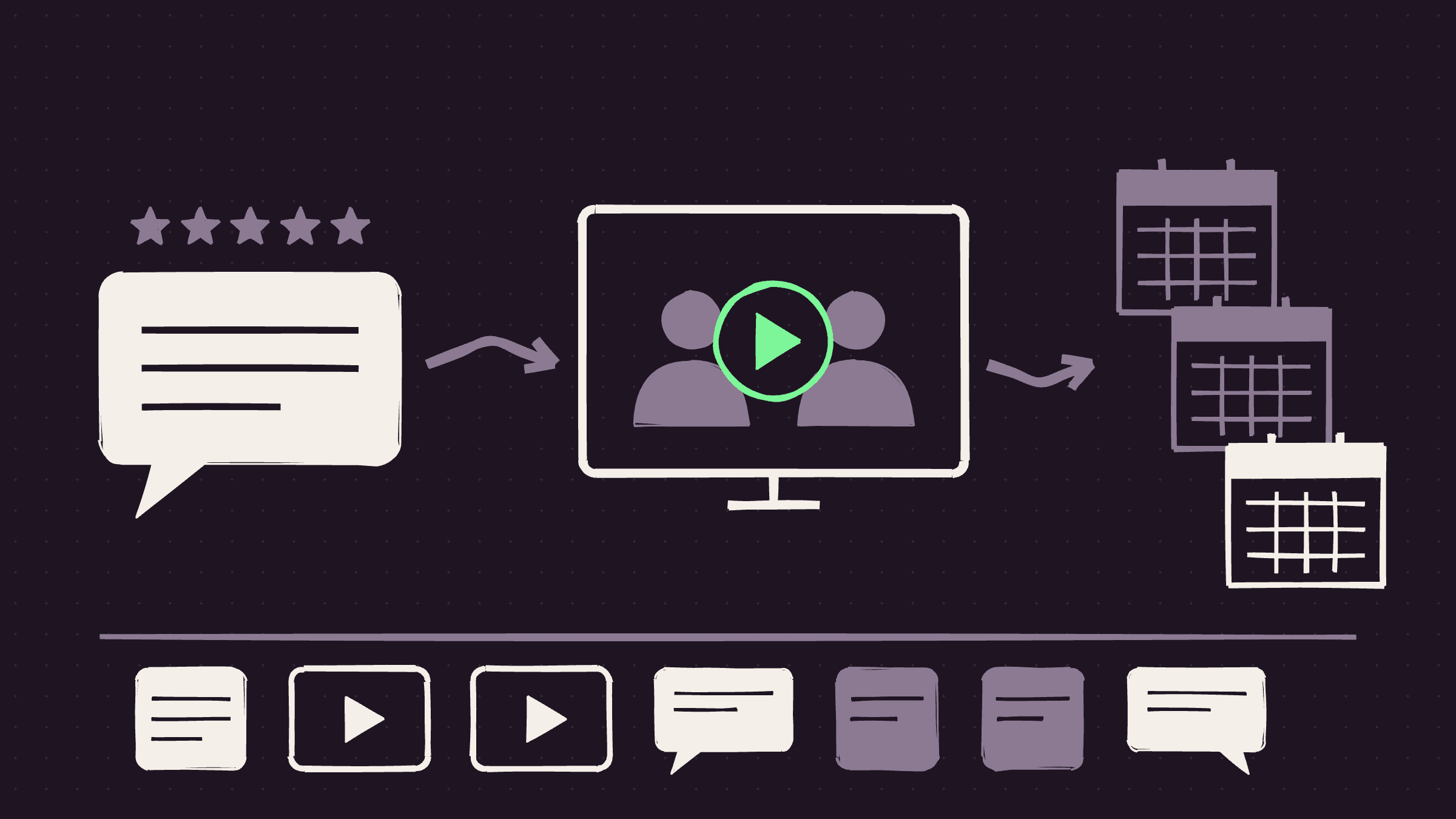
To turn a testimonial into months of content, ask the customer who wrote it for a 30-minute recorded video call, ask five questions that get the story behind their kind words, and then cut the recording into a written case study, a few short clips, quote graphics and a run of posts. One conversation comfortably fills three months, and it keeps working in your sales emails long after that.
I spend a fair bit of time on LinkedIn, and most days I see the same post. Somebody has had a lovely message from a customer, they've pasted it in, and they've written a line above it about how much it means to them. They're right to share it. It gets a good day of likes from people who already know them, and by Thursday it has gone.
Whenever I see one I leave roughly the same comment, which is that the paragraph is the smallest thing that customer could give you. Somebody who'll write that, unprompted, will nearly always give you half an hour on a video call, and half an hour of them talking is worth more to your business than fifty of those paragraphs.
This is the longer version of that comment. I do this for IT companies, but the method is the same for an estate agent, an accountant, a personal trainer or a software firm.
Why isn't the written testimonial enough?
Because it's nearly always a summary, and summaries all sound alike. "Professional, responsive, couldn't recommend them more highly" could be about you or about any of your competitors, and the stranger reading it knows that.
What persuades a stranger is a moment they recognise. Here is the chief executive of a charity talking about the ten-year-old server in her office, in an interview for the IT company that replaced it:
Every day I lived in fear that that was the day that the server was going to break and we would have no system and we would have no backup.
Nobody writes that in a LinkedIn recommendation. She said it because somebody asked what it had been like before, and then kept quiet while she answered. Your customer has a line like that in them, and the written testimonial is the sign that it's worth going to get.
Step 1: Ask for the call while they're still pleased
Timing matters more than wording. Ask within a few days of them saying the nice thing, when saying yes is easy. Reply, thank them properly, and then something like:
It's a small ask with a time on it, it says up front that it's recorded, and it promises them the final say, which is what most people are quietly worried about. Keep that promise. In my experience most people say yes.
Step 2: Record it properly
Any video call that records will do: Zoom, Teams, Google Meet, or a recording tool like Riverside, which is what I use because it records each person at full quality on their own device.
Ask them to sit facing a window so the light is on their face, and to get the camera up to eye level, which for a laptop means a stack of books. Headphones with a microphone beat laptop speakers every time. With the recording running, ask them to confirm they're happy to be recorded, so the permission is on tape.
Step 3: Ask for the story, in five questions
Most do-it-yourself testimonials go wrong here. People ask "what did you like about working with us?" and get the same adjectives the written version had. Ask for the story, in the order it happened.
- Who are you? The business and their role, so a viewer can decide whether this person is like them.
- What was it like before? The problem, and ideally one particular day it went wrong.
- Why us, and what nearly stopped you? The worry they had before they bought is the most useful thing they'll say, because your next customer has the same one.
- What's different now? A number if there is one, and a moment that showed them it had worked.
- What would you say to somebody in your position who's thinking about it?
The questions only open the door. When they say something general ("it was a nightmare"), ask them to take you to the day it happened: where they were, what they saw, what they said. When they finish a sentence, count to five in your head before you speak, because people fill a silence with the thing they were holding back. And never finish their sentence for them. If you said it, it isn't their testimonial.
Step 4: Cut one conversation into a lot of pieces
Thirty minutes of a customer talking is about four thousand words. Get a transcript (most recording tools make one), go through it with a highlighter, and pull out:
- A written case study of about six hundred words for your website, telling the story in order with their real quotes in it.
- One longer video of two to four minutes that tells the same story from start to finish.
- Three to five short clips of under a minute, each about a single point. The worry they had before buying is always one of them.
- Four to six quote graphics with their words, their name and their face.
- A post to go with every clip and graphic, and two or three lines your sales emails can borrow.
One rule covers all of it: use their words as they said them. Trim a quote by all means, but don't stitch sentences from different parts of the call together, and don't tidy their phrasing into something more polished. The slightly clumsy real sentence is more believable than the smooth one, and it's their name on it.
Step 5: Spread it over three months
The mistake is posting everything in one excited week. Your audience sees a fraction of what you post, so one story told several ways over a quarter reaches far more of them.
Month one is the launch. Publish the case study on your website, post the longer video with your customer tagged, send it to your email list, and put the single best quote on the page for the service they bought.
Month two is the clips. One short clip a fortnight, with a quote graphic in the weeks between. Write each post about the reader's situation and let the customer be the evidence. "If you're putting off replacing something because it still sort of works, listen to this" will get more attention than "another happy customer".
Month three is where it goes into sales. Add the story to your proposals, and send the clip about their worry to prospects who have gone quiet with the same one. Ask your customer whether they'd like to share the video themselves, and write them a draft post so it's easy.
After that it carries on working without you posting anything, because it's on your website and in your follow-up emails for every new enquiry. I've gone through every place a recording can be used, in marketing and in sales, in what to do with a recorded customer call.
What goes wrong when you do it yourself?
Customers are polite to their suppliers. They'll happily tell you what's good now, and they'll soften what it was like before and skip the doubts they had about you, since you're sitting right there. Those are the two parts a stranger most needs to hear. You can close some of the gap by saying at the start that the rough bits are the useful bits, and meaning it.
The other thing is time. The call is half an hour. Choosing the moments, cutting the clips, making the graphics and writing the posts is more like two or three days of somebody's attention, and it's the step that quietly doesn't happen. If you only manage part of it, do the written case study and two clips. That's still far more than the pasted paragraph was ever going to do for you.
Questions people ask
Do I need permission to use a customer's testimonial in my marketing?
Yes. Tell them the call is recorded before it starts, get their agreement on the recording, and show them what you plan to publish before it goes out. If their employer has a say in what they can endorse, ask them to check before the call.
What if my customer doesn't want to be on camera?
Record the call anyway, with their permission, as audio only. You lose the video clips but you keep the written case study, the quote graphics and the posts, which is most of the list.
Can I do this with a customer from a year ago?
Yes, and they can tell you what has changed over time, which a new customer can't. They'll have forgotten some of what it was like before, so send the questions a few days ahead to get them thinking.
Related reading
- What if my client says no to a testimonial?
- You've recorded a call with a happy customer. What do you do with it now?
- How to be good on camera in a video testimonial
If you'd rather hand the whole thing over, this is what we do for IT companies and technology vendors. I write the questions and run the interview, I choose the moments and write the edit notes, a human editor cuts the film, and people review it before you see it. None of that is automated. One conversation with your customer, and the films, case study, graphics and posts back 14 working days later.
See how it worksJames interviews MSP and tech vendor customers for a living and runs MSP Testimonials, the interview-led testimonial service. If a customer of yours has a story worth telling, this is how it gets told.